OKKP Operations Platform
Chief Full-Stack Developer · From scratch
An operational management platform I designed and shipped from scratch: employee management, violation tracking and reporting dashboards, with role-based access and audit logs.
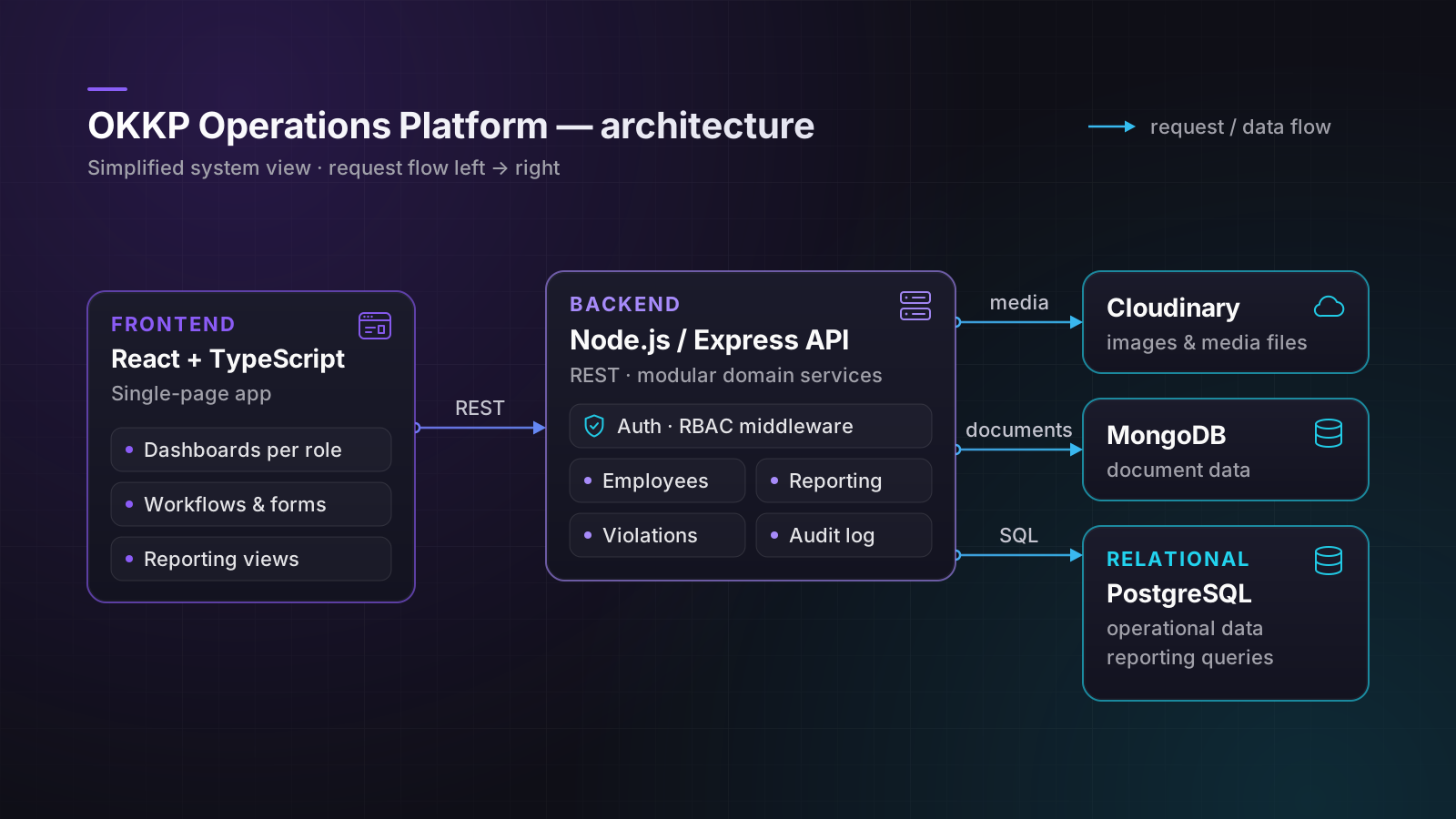
Frontend
API
- Auth · RBAC
- Employees
- Violations
- Reporting
- Audit log
Data
Problem
Avenue Group needed one system for day-to-day operations — employees, violations and reporting — and the reports had to work for staff who don't write queries.
Solution
I architected and built it end to end: a React + TypeScript SPA, a Node.js / Express REST API and a PostgreSQL + MongoDB data layer, with role-based access, audit logs and secure Cloudinary uploads. I also owned deployment and production support.
Result
Shipped to production; non-technical staff export audit-ready Excel datasets on their own.
Overview
At Avenue Group I was the Chief Full-Stack Developer on OKKP, an operational management platform that started from an empty repository. The goal was one system for the company's day-to-day operations, with clear boundaries between the UI, the business logic and the data layer.
I architected it end to end: a React + TypeScript single-page app, a Node.js / Express REST API, and a data layer on PostgreSQL and MongoDB. On top of that I built the core modules — employee management, violation tracking and reporting dashboards — with role-based access control and audit logs, plus a secure media-upload pipeline on Cloudinary and Multer.
Reporting had to work for people who don't write queries, so Excel exports let non-technical staff produce audit-ready datasets on their own. I also owned deployment and production support, and delivered a fully responsive interface in Tailwind CSS.
What it does
- Employee management, violation tracking and reporting dashboards
- Role-based access control and audit logs across modules
- Secure media uploads through Cloudinary and Multer
- Excel exports that produce audit-ready datasets without a developer
What's next
Hiring for a full-stack, Python or AI role — or need something like this built? Let's talk.
I'm available immediately — on-site or hybrid in Moscow, or remote; full-time or contract. I reply within 48 hours — faster on Telegram.